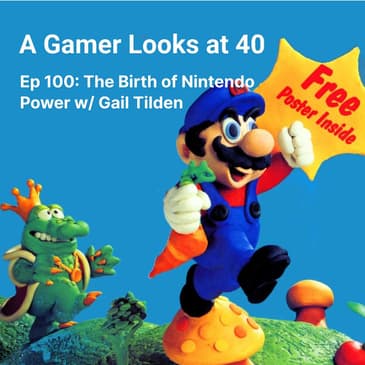
When Mario's Claymation visage first landed in my mailbox in the summer of 1988, I was a Nintendo fan. After tearing into that inaugural issue of Nintendo Power, I was a devotee. On this episode of A Gamer Looks at 40, I chat with the architect of this incredible periodical, Gail Tilden.
During our conversation, we discuss her beginnings in the industry, the creation / curation of the magazine, and the unique culture that allowed Nintendo Power to become a window to a world of games I'd never experience otherwise.
SONG COVERS:
Super Mario Bros. Main Theme - Can I play ALL the parts on 1 guitar?? by TV on Guitar - https://www.youtube.com/watch?v=OWqD-bjjR14
MARIO 2 on CLASSICAL GUITAR - Basically the hardest thing I've ever played by Sam Griffin Guitar - https://www.youtube.com/watch?v=hASvFH3w1Ik
Super Mario Bros Theme - Overworld (Nintendo New Acoustic Classical Fingerstyle Guitar Cover) by Jonas Lefvert - https://www.youtube.com/watch?v=33uaug_BV7g
Final Fantasy 1 - Town Theme (Nes Acoustic Classical Guitar Fingerstyle Music Tabs Cover) by Jonas Lefvert - https://www.youtube.com/watch?v=DpJ7j8M6dtw
My Website: agamerlooksat40.com
My Discord: https://discord.com/invite/SdaE4atGjC
My Twitter: @agamerlooksat40
My TikTok: @agamerlooksat40
My Facebook: facebook.com/agamerlooksat40
My Insta: @agamerlooksat40
My Patreon: patreon.com/agamerlooksat40
My Email: agamerlooksat40@gmail.com
My Phone Number: Ehhhhh, not gonna happen. :-D
[00:00:00] Before we begin today's episode, I want to thank everyone who has taken this podcast
[00:00:05] journey with me since May of 2021. Since then, I have conducted 148 interviews, created 130
[00:00:14] hours worth of content, and been lucky enough to have over 21,000 downloads. Today marks
[00:00:21] the 100th numbered episode of A Gamer Looks At 40 and I am thrilled to mark the occasion
[00:00:27] with a conversation with someone I consider to be a video game legend. A person who took
[00:00:34] a chance to make something different and through that risk created a magazine that helped define
[00:00:40] my childhood for nearly a decade. Thank you so much for listening and enjoy the episode.
[00:00:54] When I received my Nintendo Entertainment System in the winter of 1987, my parents went slightly
[00:01:02] off script. Instead of the action set which had a Zapper and the Mario Duck Hunt combo
[00:01:09] card, I received a basic set. The basic set contained the system, two controllers, no
[00:01:16] packing game, and a copy of the official Nintendo Player's Guide. And somewhere in
[00:01:22] the depths of that box lived a tiny 4x6 registration card for the Nintendo Fun Club. Since it
[00:01:30] was free to join, my mom had no issue writing my name on that card and dropping it in the
[00:01:37] mail with our address. A few months later I received a membership card, a welcome letter,
[00:01:43] and the first of several Nintendo Fun Club newsletters. Featuring tips, tricks, and
[00:01:49] previews to new games, this club cemented me as a Nintendo devotee. But when an oversized
[00:01:57] version of the newsletter with a claymation Mario on the cover landed in my mailbox in the
[00:02:02] summer of 1988, I knew I was in love. My Fun Club was now Nintendo Power and I had to have it.
[00:02:13] From that day forward for the next ten years, Nintendo Power served as my monthly connection
[00:02:23] to the world of video games. It wasn't just a place for codes and maps, it was a window
[00:02:29] to a world I could never even dream of tasting. Games I'd never play were burned into my
[00:02:38] memory via the pages of Nintendo Power. The magazine helped me become a better reader,
[00:02:44] inflamed my imagination, and allowed me to be conversant with my more affluent classmates
[00:02:51] who could afford the latest titles. And this week's guest was the architect for that
[00:02:57] formative subscription. On this episode of A Gamer Looks at 40, I chat with former editor
[00:03:03] and chief of Nintendo Power, among other accolades, Gail Tilden. During this conversation we
[00:03:10] discussed how the magazine started, the philosophies behind the copy, and the unique
[00:03:15] culture of Nintendo that gave birth to this landmark publication. We have a fun one ahead,
[00:03:22] so let's run to the mailbox, rip the magazine from its plastic, and hope this month's contest
[00:03:28] is a good one as we embark upon Episode 100, The Birth of Nintendo Power with Gail
[00:03:35] Tilden.
[00:03:36] Alright Gail, thank you so much for taking time to chat with me about your time at
[00:03:42] Nintendo Power Magazine. Just so you know, Nintendo Power was extremely formative for me.
[00:03:48] I was one of those original 3.2 million people who got that issue for free in the mail because
[00:03:53] I was part of the fun club. So this is a real treat for me to talk to somebody who is actually
[00:03:58] able to be a part of that. So before we get started on that, I'd love to hear a
[00:04:03] bit of your life before Nintendo Power, how you came to be working over there at
[00:04:09] Nintendo and just go from there.
[00:04:12] Yep, I was working in advertising and marketing and I had a job at Britannia Sportswear, live
[00:04:21] in Britannia, and I got in the advertising department there and the person who hired me,
[00:04:27] her name was Deborah Simmons, and a couple years later she called me and said, I'm having
[00:04:33] a baby. I'm at this company called Nintendo. It's the Donkey Kong Company and I really need
[00:04:39] to, I'm having a baby like in a month and I really would love it if you would come over
[00:04:43] here and help me out and make sure things are covered for my maternity leave. So
[00:04:51] thanks to Deborah, I joined the Donkey Kong Company and I have to say I was a
[00:04:57] little surprised in 1983 that I thought, oh, this is a Japanese company. It's going to be so
[00:05:04] high tech and advanced because they make video games. And we had for accounting,
[00:05:12] there was like an Apple II or something like that in a closet and that was the most,
[00:05:18] that of course there was no such thing as like a PC on your desk or something but
[00:05:23] it was way less high tech than I imagined. Howard Phillips skateboarding around the
[00:05:30] warehouse, that's kind of the thing. So in those early days, 83, that was before
[00:05:36] the launch of the NES in the US. So what were you doing for that beginning part? Were you
[00:05:41] kind of like ramping up for that? Because it was kind of like right when the game crash happened.
[00:05:47] Yeah, you know we had two different types of product lines of course arcade games and when I
[00:05:53] started Donkey Kong 3 was my first game that I worked on. And for that we would go to these
[00:06:01] trade shows where there's two levels of people. There's a distributor so people buy all the
[00:06:08] arcade games and then they hire people called operators who go around to all the
[00:06:16] locations that they're placed on and open them up and collect the quarters.
[00:06:20] And it's a very funny business because it's really a vending business like a Coke machine or a
[00:06:29] washing machine and the idea that you are collecting cash out of something
[00:06:35] is also fraught with some type of underworld scenario.
[00:06:42] And so it was a very funny business, very different levels of people from all over the country who
[00:06:47] were at the two different levels. So we were marketing too right? We wanted people to
[00:06:53] purchase our big machines and put them in all these locations and when you would go to trade
[00:06:59] shows and be marketing you'd have if a guy had a huge key ring filled with keys, he was an operator.
[00:07:07] He's someone who was collecting the quarters. If a guy was wearing a suit and
[00:07:13] looked like he was part of the mafia, he was definitely a distributor. So anyway very funny.
[00:07:20] That was our first one of our lines of business. The other was Game and Watch and Tabletop.
[00:07:25] Game and Watch. Right, right. The little mini arcade games and many handheld games that were just an
[00:07:34] individual title and so we would sell those at retail and did a little bit of TV advertising
[00:07:40] and that kind of thing. And we actually I remember doing TV ads for something that what was it called
[00:07:49] there was silver spitball sparky and something else. Anyway they were a little bit more
[00:07:54] advanced because I think it had a the screen had a little bit of color to it.
[00:07:59] And we used one of those scenes was a wedding scene and so the staff all was the wedding
[00:08:05] guests in the TV commercial. Oh that's so fun. Oh it's so fun. I love that. Which was fun. So
[00:08:11] from there we launched the NES in 85 and that must have been nerve-wracking experience
[00:08:20] launching the NES because again you had that crash we had and Atari wasn't doing well, home
[00:08:25] video game systems. Everyone listening to this show knows the story pretty much but
[00:08:30] how much confidence did you all have as a company when you launched the NES in America?
[00:08:37] So I think they didn't have that much confidence but like we did many other times really
[00:08:44] you know you go all that we're all in like big financial risk, big inventory risk.
[00:08:52] And so it was kind of an all-in proposition at the time keep in mind I was like 27
[00:09:00] advertising girl and I wasn't privileged to many of those senior management decisions.
[00:09:08] I was working on the campaigns themselves and things like naming the products and getting the
[00:09:15] packaging all done all those kinds of things with our advertising agency and PR firm doing mall tours
[00:09:22] but I was not a decision maker. Ron Judy was my boss I want to give a shout out he passed
[00:09:30] recently and you know he doesn't he's someone whose name doesn't come up but Ron was actually
[00:09:36] the VP of sales and marketing that we all reported to and then of course Mr. Aracau was our president.
[00:09:43] Were you were you responsible for a lot of the advertisements, TV advertisements?
[00:09:48] Yes. One of my favorites with the famous one of course is the the legend of Zelda one is
[00:09:52] I think probably the most famous of that time with the two kids the Zelda rap was that were
[00:09:57] you involved with any of those? Okay so Zelda rap although I think I was involved I the
[00:10:05] Zelda commercial that probably lost me my job as the head of advertising marketing and
[00:10:11] brought someone in above me was Ron Judy left in a guy named Peter Main came in anyway right at that
[00:10:17] time so there is the Zelda commercial where he's in a padded cell. Yes I know this one yes he's
[00:10:24] looking around for tech tights I know this one very well yeah tech tights watch Zelda become
[00:10:31] a legend on your Nintendo entertainment system. Zelda! Switch way go tech tights. Anyway when that
[00:10:43] commercial was pitched to us it was a stand-up comedian who was who was saying all these funny
[00:10:50] names and having a lot of physical comedy and then I get to the set and you know in this kind
[00:10:58] of situation like it's just me with the agency and the production company and the actor and then
[00:11:04] they do this padded cell thing and I'm just like this is not what you sold us it was a huge issue
[00:11:11] everybody was upset I was like I cannot approve this this isn't what you sold us and I'm like
[00:11:17] walking around Los Angeles I've got art directors like begging me to do it and I said if we're
[00:11:23] if we're going to do this we got to call Nintendo of course there's no video cameras or
[00:11:28] anything right anything we got to call Ron and we got to repitch this commercial because you know
[00:11:37] but anyway even though we repitched it we did it I was the one there and I was the one responsible
[00:11:42] for the fact that it actually happened and it gave way to the rap commercial quickly.
[00:11:51] That's so interesting but they aired it they I guess they spent the money on it right so
[00:11:57] mines will go out it's a very unique I will say that it's very memorable I remember that clear
[00:12:02] as day that that commercial that's so funny so moving from the Nintendo to you know doing
[00:12:09] advertising for NES to the magazine were you also starting part of the fun club as well before
[00:12:15] that became Nintendo power was that part of the that transition? Yeah and you know something that
[00:12:20] I just dawned on me recently I kept thinking like why do people keep thinking that Howard Phillips
[00:12:26] somehow was in marketing or publications like he had a very important job but it wasn't you know
[00:12:34] and I thought maybe people actually think being the president of the fun club news
[00:12:38] was actually a job like that's right they think that there was actually something that was a fun
[00:12:46] was an actual club somewhere and he was the head of it or something I'm like that's
[00:12:53] it had never struck me before that the idea that he was like the mascot
[00:12:59] somehow meant people thought that he actually really was responsible for that tool
[00:13:04] and so it was very funny but what what happened was
[00:13:11] one of the marketing people that came in we were focused on direct marketing and we were collecting
[00:13:18] all the names and addresses partly for warranty or for other information
[00:13:23] which is how you got the 3.2 million people got the magazine
[00:13:27] but what happened is that so we hired an agency I believe it was Footcom Building Direct
[00:13:35] and they suggested that a marketing tool we could do is send out a newsletter
[00:13:41] entice more people to send us their name and address by promising them this free newsletter
[00:13:48] and so the creative aspect that they came up with was this idea that we'll use Howard who
[00:13:55] we were using as a gamer spokesperson anyway right he so he was the honorary president of the fun club
[00:14:07] which which was really the promised newsletter to get you to send us your name and address
[00:14:13] but it grew it was interesting especially from Mr. R. Cohen's point of view it grew so fast
[00:14:21] and we started making the newsletter more and more elaborate which made it more expensive of
[00:14:27] course from the kind of black and pink one at the beginning to the Mike Tyson one at the end
[00:14:34] it was very the investment in knowing that so many people wanted more information was helpful
[00:14:42] but I think Mr. Aracawa's exposure to how publishing is so popular in Japan and so
[00:14:50] popular for kids and teens that he said my daughters were born in the U.S. of course they do speak and
[00:14:58] read Japanese but they read those magazines they can't wait and they read them and consume them
[00:15:04] and I know that it's not a cultural day he he knew he said it's not a cultural difference
[00:15:10] somehow we don't have the right kind of publishing in the U.S. so then with the mission
[00:15:17] of helping make sure that people enjoyed their games and that they could get tips and help getting
[00:15:25] through them and that they would not feel that the parents wouldn't feel that they wasted their money
[00:15:30] all this was predicated on the crash having happened and also things like the game counselors
[00:15:37] were part of that philosophy having strong customer service I mean our customer service
[00:15:43] agents had to come in on Christmas Day because if families opened their hardware and couldn't
[00:15:50] hook it to their TV that would be a negative situation so really the extra effort for
[00:15:58] making sure there would be high consumer satisfaction drove a lot of these decisions
[00:16:07] and tools plus you know when we got up to like 600,000 newsletters with Mike Tyson by the time that Mike
[00:16:14] Tyson issue to develop that and put it in the mail was definitely a drain on the traditional
[00:16:22] marketing marketing budget so at that point you decided to move because you were you did
[00:16:28] bi-monthly originally that's if I'm not mistaken I think we Nintendo power was a bi-monthly
[00:16:33] maybe the first couple years and then you went to every month and I think for a little while
[00:16:37] you were supplementing with strategy guides too you're doing right so it was probably not
[00:16:41] not two years before you received something in the mail monthly but it was it was alternating
[00:16:49] and then it ended up being an independent sale of the guide outside of the magazine
[00:16:56] plus at the time imagine that the licensing of third-party software
[00:17:03] started growing in 1985 we didn't allow licensee titles so as it started growing because Nintendo
[00:17:12] power started in 88 it there was just a lot more to cover a lot more information a lot more
[00:17:19] to cover a lot more to talk about it Game Boy came out you know which was kind of deadly
[00:17:24] for me like covering Game Boy games was not you're wearing a Tetris shirt I know I this was not
[00:17:30] intentional I promise this is happening to be what I put on this morning challenging game to cover
[00:17:36] why was Tetris challenging oh is it because of the whole the whole situation with Russia or
[00:17:40] what was this why was that a challenging one oh doing a doing a review of tips and tricks
[00:17:45] and you know there's no maps it's not colorful so yeah and mr. Arkhowitz said you have to do
[00:17:52] 16 he now he didn't generally dictate what we needed to do in our coverage sure but he said he
[00:18:00] wanted 16 pages on Tetris and it was just mind-numbing that we could do that I remember that the Game
[00:18:10] Boy Tetris coverage you had like the little cartoon tetrinos or tetras whatever you call them
[00:18:15] these little cartoon tetras for some reason just came to my mind immediately yeah the tetras were
[00:18:20] Howard and Esther right oh that's right yes yes yes yes oh my gosh that's so good yeah yeah I can see
[00:18:26] that be challenging there's really no maps the strategy is complete lines make tetrises
[00:18:33] two pages I don't know wow challenging yeah yeah but as a landmark game obviously and that's
[00:18:38] that's cool that you are part of that um you did mention that a big part of your strategy was
[00:18:43] the help for the consumer experience and that's very evident from the very beginning with your
[00:18:48] counselor's corner and classified information was there a large team at the beginning so I'm sure
[00:18:54] that team grew as the magazine grew but I can imagine that being pretty challenging getting
[00:18:58] calling that information and deciding what went where um in that regard so the process was that
[00:19:05] for each issue we would have a meeting and just like the editorial board someone from marketing
[00:19:10] I think would sit in me we'd get Howard would be there and um senior writers would participate
[00:19:21] and then we would look at Howard was part of a group but sometimes it was called the big three
[00:19:29] sometimes you know it varied and uh that would rate the games on a 40 point scale and in the
[00:19:37] magazine there were some different iterations where we would use this thing that was a spider web
[00:19:44] and the spokes this how how far out you were on each spoke was how positive it was scale one to five
[00:19:52] so um Howard's real job was game analysis and uh some localization and so he was one of the
[00:20:05] people rating the game so the way we would decide what game would be on the cover or what games we
[00:20:10] would heavily feature how many pages a game would get was based on the score the scores from the
[00:20:17] big three and then especially like if a game was coming out it was kind of like you know it's
[00:20:20] going to be the cover and then are we going to do it in two months right but usually it was
[00:20:25] only two months and oftentimes a game in terms of interest from the consumer might
[00:20:32] be longer than two months or not everybody buys it the very week it comes out so what would happen
[00:20:38] is that we would need to rely on things like counselors corner and classified information
[00:20:43] or a players poll contest in order to give any more attention to that title because once you've
[00:20:50] given us strategy there's not really an opportunity to do it so then another thing that helped
[00:20:58] uh really give more attention to a very top rated title was of course a strategy guide a players guide
[00:21:16] do you know what's better than a freshly delivered copy of nintendo power direct to your mailbox with
[00:21:23] your name on it my wonderful sensational and fabulous patrons that's who starting with terry
[00:21:30] canair greg suer of the player one podcast and generation 16 series of videos the fantastic
[00:21:36] games with coffee the let's play princess bt gobbles tim nulls formerly of the leadest julien
[00:21:43] of the stage select podcast sets surgical of the all-end podcast and the wonderful debonair
[00:21:49] and always smashing pete harnie if you'd like to join these wonderful human beings pop on over
[00:21:56] to patreon.com forward slash a gamer looks at 4040 check out the tiers and sign up today when i left
[00:22:08] nintendo uh unleaved at my first child in 1988 i was in advertising right but i was asked to come
[00:22:17] back to start up publishing so when i came back we interviewed two japanese companies who had been
[00:22:28] successfully making these tips and tricks and maps and had developed a technique because you would not
[00:22:34] be able to freeze frame to video and then freeze frame and put the maps together so they had
[00:22:41] developed some techniques okay so we chose tokuma show 10 and they had a design partner called work
[00:22:50] house and a company that prepared what's called the film it's really when there's where there was
[00:22:57] no digital publishing so this is all very hand-done um called diney pond so the all the way
[00:23:05] through the proofs of the magazine was done in japan so usually two people would go in two shifts
[00:23:15] to japan to review and proof everything and then um it was printed in california and then even
[00:23:26] more complicated was that we and especially mr. arcawa didn't like the lack of security to be
[00:23:34] mailing all those at the beginning 3.2 million names out to the printer so we started a mailing
[00:23:43] facility inside of nintendo of america so the wow so the magazines had to come and any
[00:23:51] type of direct mail solicitation like we actually had like at some point 10 million names so any
[00:23:57] direct mail solicitation our own in-house mailing facility did it in order to not leak our valuable
[00:24:08] customer base that's amazing especially in those days i mean that's amazing you were that that
[00:24:15] customer minded that's really that's really admirable and i think it comes through the
[00:24:19] magazine too in a way it was written and presented and put together i find that fascinating what
[00:24:23] an undertaking wow your own mailing facility just they handle that because you didn't want those
[00:24:29] names to get out there erroneously right that's really something else so it at um
[00:24:36] so at our own office we had you know we had the writers we would make the editorial decision
[00:24:45] and then we had the writers who would be making sure they knew their games thoroughly
[00:24:54] and they would make sure that um they would write the content to match the maps but they also you
[00:25:02] know anything like counselors corner classified information etc our own writers wrote all those
[00:25:10] things and we had to send them to be typeset in japan so it the editorial side at the
[00:25:18] beginning was done um at nintendo of america but the all of the visual work was being done in japan
[00:25:29] and that was for a couple years and then as as uh quote desktop publishing or you know the digital
[00:25:36] publishing kept getting more and more advanced it certainly changed over the years that's interesting
[00:25:42] and as i'm thinking back to old issues again these old issues in nintendo power are permanently
[00:25:47] sealed into my brain they're there they're there they live rent free uh it does have like a bit of
[00:25:52] a japanese feel as far as artwork goes as i'm kind of like just thinking through them i'm gonna actually
[00:25:56] go back and see if i can find those little those little like visual threads that's very interesting
[00:26:00] that you were that that kind of collaboration made for a very unique magazine and very memorable one
[00:26:05] for sure um when when you were doing your reviews and deciding obviously what's what's you
[00:26:13] include in the magazine you had your scale did you ever have any pressure from like third parties
[00:26:18] on to put what to put on was there any pressure from like a capcom or a kinami hey we'd love for
[00:26:25] have to have this as part of the magazines i know in some magazines that's happened and i'm just
[00:26:29] curious if that was ever any pressure where you really had that kind of control where was no we
[00:26:33] what we say goes this is what's going in or how much coverage it's gonna get
[00:26:38] you know the only place where when we would go like to
[00:26:42] c.e.s or later e3 and talk to people about what was coming out of course if we got more information
[00:26:49] we could give a preview in pac watch or something like that and also depending on what kind of very
[00:26:56] exciting prize they wanted to offer getting a player's poll contest or a poster if they had
[00:27:02] really good artwork they might be able to score a poster but in order to get coverage it just really
[00:27:09] make a better game that's awesome i love that i love that and it's and it also
[00:27:16] one thing i i talked to people about nintendo power there's this we there's a very interesting
[00:27:21] blend of advertising and honesty because for me at least growing up reading nintendo power for
[00:27:27] probably a decade it was always the place where i got like the news of nintendo so big nintendo fan so
[00:27:32] if it was like my nintendo news source but never felt like reviews like an e gm or a game pro they
[00:27:38] would review things so where is that balance for you in reviews and again honesty because it
[00:27:44] they they were honest and never felt like i never felt like i was being pandered to or advertised
[00:27:49] to even though that is part of it that's part of the goal right um how how did you achieve
[00:27:54] that balance because i think that's a really tricky balance in this in this kind of space
[00:27:58] you know it is it was tricky first of all a game that really sucked wasn't going to get an actual
[00:28:05] article right it would get a video short and you would actually again depending on
[00:28:12] what year it was the way that those scores were represented i think often we had a little
[00:28:18] meter that combined them so there were four categories sometimes but if all of them were
[00:28:24] low and it sucked and you know over the years even after i left sometimes a way of doing it
[00:28:32] making it feel more like an individual person's opinion rather than a corporate mouthpiece saying
[00:28:39] something negative there was a time when there were a couple of the writers the editors would
[00:28:47] each give their comment of what they thought about the game so they could be a little bit
[00:28:51] more sharp tongued but of course nintendo's business partners don't want nintendo power to run a video
[00:28:58] short with ratings that are horrible and then to say crappy things about their game so it was
[00:29:07] slightly more of a if you can't say anything nice kind of attitude because if you could say
[00:29:14] something nice it was going to get a lot of coverage and there was one time when i really
[00:29:20] got surprised i was at like ces i guess and someone from square came up to start talking to me i was
[00:29:31] a japanese person and you know you will put you know final fantasy on the cover and he's like
[00:29:39] talking to me i'm like what are you talking about like and um i didn't know that you know and he was
[00:29:46] saying all this stuff and about mr aracawa whatever and i was just like completely taken aback i'm sure
[00:29:54] i was a complete bitch or dragon lady whatever you want to say and um you know being a haughty
[00:30:03] american marketing type person and then i found out that later that so mr aracawa talked to me that he
[00:30:12] and he really didn't influence things very much because like i said it was all based on the ratings
[00:30:18] but with dragon warrior and final fantasy being the biggest selling franchises in japan we were
[00:30:25] missing out and he did want to use nintendo power as a way of getting the american gameplayer on board
[00:30:35] with rpgs so it was true that he wanted so we did this con i don't know if you remember we did this
[00:30:44] series of contests i think it went on for like five months we would show something about the game
[00:30:51] and then there was a contest and you might get like i can't even remember what the lower level
[00:30:55] prizes were but they were you know who knows a t-shirt or something and at the very end something that
[00:31:02] i think wasn't even a thing yet we had a larping trip for four to tortola
[00:31:12] i don't remember this and i'm wow okay and so um the writers one person went down there and
[00:31:19] set it up and then came back and then a couple of them went down there and one of our our writers who
[00:31:27] he still works at nintendo and localization his name is dan osan he had just gotten married
[00:31:34] and he and his wife it was like their honeymoon they went and they were and she played she played
[00:31:39] it couldn't have been zelda but there must be some character in final fantasy that lays in
[00:31:43] the forest or something and so like they leave his new bride laying in the forest and the kids
[00:31:51] and their chaperone have to go find alice laying in the forest how fun is that that is so that's
[00:32:00] so interesting i was going to ask you about the contests the contests were always
[00:32:06] they felt extravagant how did those contests a lot of those came from peep from
[00:32:11] from other companies who are looking for coverage or you want to continue the coverage for these
[00:32:15] games you like yeah it sounds like definitely and although there were some wild ones they were wild
[00:32:19] like we had a batmobile we definitely put things like the super bowl or f1 race or you know lots
[00:32:26] of things like that meet a celebrity matt graining finished a poster for someone for simpson's like
[00:32:33] all kinds of things but um when we asked people what kind of contests they liked
[00:32:40] they really want would rather win stuff than win trips and that interesting and it was so
[00:32:48] experience that they would rather win stuff than an experience so they really preferred if they
[00:32:53] were going to win like a game a month for two years then to win you know a trip to europe so
[00:33:02] yeah it was that was very funny but you know i was always you know thinking big i wanted you
[00:33:08] know the big moment and uh but the the readers you know were thinking maybe what was more realistic
[00:33:16] in their own life and situation yeah i mean now i think our trip to europe would be amazing but i
[00:33:23] can see myself as a 12 year old being like no just give me games every month why would i want to go
[00:33:28] to why would i want to go to a treasure island where one of them was like a treasure island
[00:33:32] or something you had like an island it might be that might be the final fantasy when you're
[00:33:36] referring to that might be the one i always stuck in my mind like i could go to a treasure island
[00:33:41] one of my earlier episodes i interviewed i went just one over a weekend i went through a lot of
[00:33:48] old nintendo power magazines i was looking for the grand prize winners i want to interview
[00:33:53] someone who won one of the grand prizes and i did i well i interviewed somebody who won
[00:33:57] the grand prize to see the filming of robocop 2 it was this young man he and and then he
[00:34:05] was sharing his story he had an amazing time was very influential he he shared this amazing story
[00:34:11] of y'all taking care of him like so y'all took care of these people when you did these things
[00:34:16] it was really cool hearing that down by kind of both sides of it like where these things came
[00:34:20] from yeah you know one that i would love to have been the one to chaperone but you know
[00:34:25] the writers generally all chaperoned and um was lucas film uh yes gave someone a tour and like the
[00:34:37] story that i heard anyway like they got to put on indiana jones jacket and all this stuff they were
[00:34:42] at skywalker branch and man so i want to go to skywalker ring i don't know if i'd be able to
[00:34:52] fit uh indy's jacket but i sure as i sure would try yeah definitely would happen oh that's so cool i love that
[00:35:22] were there any situations in the in the process of of making the magazine where you had
[00:35:28] maybe features that were you're going to do but maybe fell through with the last minute or any
[00:35:33] of these i love hearing stories of of oh no this was almost a disaster and then how you got through
[00:35:38] that um were there any situations like in the process of making the magazine where that you can recall
[00:35:43] that was like yeah we had this feature or we couldn't get the artwork in time because i've
[00:35:47] talked to other magazine editors that that can be sometimes a thing yeah do you have any
[00:35:50] situations like that where you know we had a feature that you're going to run and then
[00:35:54] all of a sudden oops it goes away and you have to scramble you have to kind of mad scramble
[00:35:59] you know that doesn't that doesn't strike me but probably a famous story that gets told a lot is
[00:36:05] when we first started since to tokuma shatem was our publishing partner when we got to japan and
[00:36:12] howard and i went together um we i didn't like anything i thought the colors were off and
[00:36:23] the craziness if you look at issue one like there's some how much track and field or
[00:36:27] what but something with all these like hash mark looks like a cyclone fence in bright pink or something
[00:36:32] anyway it was crazy and i was like absolutely not just not gonna fit our taste and it turned into this
[00:36:41] we call it the aca saca prince wars the then the art director quit and you know it was and then
[00:36:49] howard called me the dragon lady and now everybody calls me the dragon lady and um you know people
[00:36:55] were always smoking all the time and so and also while we were there that's when we came up with the
[00:37:03] howard and nester concept they were trying to come up with a it's hard to get breathing room
[00:37:11] between all those reviews so we were coming up with breathing room kind of concepts and um
[00:37:19] yeah i mean i think that that probably was the time where it was the biggest rush to the
[00:37:24] finish and the biggest disasters was just getting started and on an ongoing basis just the feeling
[00:37:33] of color schemes etc is quite different from in japan than from the us you were mentioning
[00:37:41] like you thought that you could imagine things feeling more japanese so if you go back and
[00:37:47] look at the first few issues one area where you can really tell is they would write um
[00:37:54] like comic um words like for emphasis so it's the words like thwomp or etc but remember that those
[00:38:05] words were like often hand-created artwork that was in the film so for me to say i don't those
[00:38:13] words don't make sense like i could we could only redo so many articles you know and so often
[00:38:21] one of the things that makes the least sense and also later in all the comics is the um use of
[00:38:31] action words and uh they're built into the artwork even like the um the zelda comic that one was
[00:38:42] tough because it the ishinomori shōtorō is a very famous japanese artist and getting him to do this
[00:38:51] was extremely important and uh people in japan who got him to do it and then they would send it
[00:38:57] and so you know when i'm just like thwing does is not a thing swinging a sword and you know having
[00:39:04] it say swing and then and they're like oh no no no we cannot ask him to redo this panel
[00:39:10] to change that so that's a good really good example of one not just color and design but
[00:39:17] it kind of went beyond that sure i love that that those those large you did a there was a zelda one
[00:39:25] and there was a super Metroid one if i believe i think a ninja guy didn't too hadn't had a series
[00:39:30] like that that might have been part of the player's god i don't remember exactly those were very
[00:39:34] ambitious and y'all had always had interesting ideas and it's interesting that you say that
[00:39:39] you had these little breather sections because in traditional magazines those would be ads and
[00:39:44] y'all never really had ads again i think that's probably why you probably felt led to do that
[00:39:49] i'm assuming that's an intentional decision not to have like traditional ads in the magazine which
[00:39:53] i always respected again read my friend's game pro and like every other page is an ad you know here
[00:39:59] that this wasn't the case and i'm yeah it was intentional at the beginning at the beginning
[00:40:05] what i would say is the amount of people who subscribed i think our top was 1.3 million
[00:40:11] from the 3.2 so that was a pretty good conversion rate so at the beginning and i meant as you
[00:40:18] mentioned we only did six issues the the financial outlay it was never a break even proposition but
[00:40:29] the financial outlay matched up a little better and then i think later when the when the after
[00:40:36] in 98 is when i left to work on pokemon and work in the treehouse so after that we did
[00:40:44] accept advertising i've been reminded that i actually was part of that discussion which
[00:40:49] i don't remember but um you know we financially it needed to be offset more but you know at
[00:40:59] the beginning even part of this conversation is that you know if you accept all this
[00:41:04] advertising someone can buy the coverage so that was not meeting the mission
[00:41:11] now and that's and i love the fact that that was a very clear mission
[00:41:15] early on that you was like this is going to be we're gonna not only you know obviously
[00:41:21] advertise our games right and show show the kids the games that are coming out
[00:41:25] but provide valuable information you know like i learned about the kanami code
[00:41:30] from nintendo power right and it was such a vital part of my again upbringing and a lot of people's
[00:41:36] upbringing i have to tell you i have to tell you something about the kanami code i know i'm not
[00:41:39] let i'm not letting you ask all your questions but no no no this is fine please i went into a winery
[00:41:46] in walla walla washington people might not know this but it's actually a fairly
[00:41:52] significant wine region and i'm sitting there and the the whole thing is kind of a little
[00:41:57] like a geek bar so they've got they've got stuff here there and everywhere and there's like a chalk
[00:42:03] board in front of me with up up down down and and i said you have the kanami code on your
[00:42:11] on your thing i mean looking at me like okay this something's up you know yeah and
[00:42:19] so i had to reveal who i was but uh oh that's funny it was funny you're like i know what that
[00:42:26] exactly what that is right here in my fridge my husband keeps saying we can open this one and
[00:42:30] i'll be like no no don't open it i love it that's so fun when you got did you get all that information
[00:42:38] from the developers themselves for the the clout like the codes and such i know the counselors
[00:42:43] corner they were playing the games probably and just learning the games and reporting on
[00:42:47] their most commonly asked questions but the counselors corner i mean the classified information
[00:42:50] was that from the actual developers like they send you that you know they were supposed to send
[00:42:57] anything like that that they knew you know sometimes it was just that a game
[00:43:01] is broken like that you can actually find out later that if you do something it makes the game
[00:43:07] do something it wasn't supposed to but um if they were doing it intentionally easter eggs they
[00:43:12] were supposed to submit those codes to the it's called lot check but to the engineering
[00:43:19] department that um and testing department that made sure that the code was stable and uh so
[00:43:28] yes we would get stuff like that things that came in house to nintendo the licensees were aware
[00:43:35] that anyone in in nintendo of america would have access right uh or i mean for reason but um
[00:43:45] yeah so they they would get that stuff imagine when we're talking about nintendo power but
[00:43:52] in if you were in game counseling they had a system it was called elmo i actually don't know why
[00:43:59] but it um they had to have a complete written script and a way to jump and first of all keep
[00:44:07] remembering this is the days when pc's laptops everything was before the internet infancy they
[00:44:15] could had to be able to find anywhere in a game if you call the game counselor they had to be able
[00:44:20] to find i mean it started to become hundreds of games and they had to know every have written
[00:44:28] cataloging for these few there were a few hundred game counselors and they would be have to be able
[00:44:33] to find information on any title any place in the game to help people it's like really made much deeper
[00:44:43] than what we were doing that's so interesting that's an that's interesting again i can't imagine that
[00:44:50] that the amount of effort that goes into cataloging all that information how was the uh culture
[00:44:56] working in nintendo during that time you you talked about it a little bit how you were expecting
[00:45:00] high-tech futuristic and you can quite get that but how was the culture just working at
[00:45:04] there the people that you were surrounded by every day yeah you know what because i started
[00:45:12] when there were really much the smallest headcount was about 35 so i had the good fortune of
[00:45:20] having a actual relationship with the people that were running the company other people
[00:45:26] that started after me maybe i had a more formal relationship but you know so certainly from 83 to
[00:45:34] 88 87 or 88 it was you know really small very much just a family um
[00:45:42] you know if mr. rco was in a meeting with the head of ea or someone and you walked by with a dog
[00:45:48] people would parade their dog he would just leave the meeting to talk to the dog or
[00:45:53] he would when nintendo works worked as a japanese company you got big bonus periods that's what happens
[00:46:00] in japan so people would frequently buy a car after they got their bonus and he would go drive their
[00:46:05] cars around the parking lot uh this kind of a famous thing where it was uh team howard
[00:46:12] lincoln our team mr. rco and where they drove go we made a go-kart track and they did a mario
[00:46:19] a literal mario kart race and you had to say what the whole company got invited out to say
[00:46:24] what team you were on like he loved having big christmas parties and we would and it's not wasn't
[00:46:32] for the extravagance like he really wanted people to feel um so connected and they would they would
[00:46:39] do funny things like we have you ever been in a bingo game where at the end you know in the end
[00:46:44] everyone in the room yells bingo i've never i've never i've been i've been in a couple of bingo
[00:46:50] games but never were that happens okay well there are setups you know where okay we're asking this
[00:46:56] question this question and then everyone yells at the same moment not realizing we all got called
[00:47:03] to go into a warehouse the whole company and they explained how everything had been going great
[00:47:09] you know so thankful thank you so much and you know blah blah blah okay so now for the big surprise
[00:47:15] every we're gonna do uh like being whatever everyone said bingo ever it's for you know
[00:47:22] we're gonna have a big surprise and if you get a bingo you're gonna get an extra two months salary
[00:47:26] or something like this like big and then the whole room said bingo at the same time and
[00:47:35] they just like it it was so cool that the the philosophy was so magical that they wanted
[00:47:45] everyone to have that feeling and i think another thing that is maybe more on the japanese side
[00:47:53] that people um maybe miss when you think about japanese work culture but every single
[00:47:59] person's job is critical to getting the job done so in terms of kind of looking down on someone
[00:48:07] or someone being disposable because they have a less impressive job everyone from the receptionist
[00:48:14] at the front to the housekeeper to the whatever that the philosophy was truly that we all like
[00:48:24] it takes every single person to make this work and i always felt that way that um from particularly
[00:48:35] from the japanese side from you know we hired a lot of american executive types and i was not one of
[00:48:43] the boys out on the golf course that's true so i don't want to act like that didn't also occur
[00:48:48] but um it was you know it it really was it was fun and felt like you were i really did feel that i was
[00:49:00] valued that's awesome and that's a really great feeling um yeah any any company any situation
[00:49:07] you're in it's important to feel valued and that sounds like it's uh something they
[00:49:11] made intentional efforts in doing so with our last few minutes i'd love to just ask you
[00:49:16] i shared a little bit how nintendo power was it was literally like my window to games i knew i'd
[00:49:22] never play i was my family got me you got two games a year birthday and christmas and they were
[00:49:27] right next to each other so i'd have two games i'd get one on december 25th december 27th that
[00:49:33] was and i was the deal unless i somehow scrounged up some money so nintendo power was always my
[00:49:39] window into the world of games that that helped me experience those games without actually experience
[00:49:45] them and it was it was my inroads to social situations at school where someone's talking about
[00:49:50] megaman i didn't play megaman but i knew about megaman because of nintendo power when you hear
[00:49:55] stuff like that how does that make you feel to realize that you were a part a crucial part
[00:50:01] of a lot of young people's experiences and growth during that time period this
[00:50:06] from a personal level like how does that make you feel yeah i really love it it's one of the
[00:50:10] reasons why i would say that that nintendo power was the center of my experience at nintendo and um
[00:50:19] that's one of the reasons that it was my favorite was it was a whole product and i have so many
[00:50:25] people and i would have that experience as a kid too when you get something in the mail like
[00:50:30] you're so excited to get it and you know it made kids it wasn't like educational in terms of them
[00:50:38] being excited about reading but the fact that they would enjoy getting this and studying it and
[00:50:46] and some kids some people by the way say whether they didn't get a lot of games because they
[00:50:51] didn't have a lot of money whether they you know sometimes they say that they were having a crappy
[00:50:56] time in their childhood or their adolescence especially and that you know it was like
[00:51:04] comforting and made them feel happy you know brought happiness when they would get the magazine and
[00:51:12] yeah it makes me it does make me feel great you know i was it's nothing better especially
[00:51:17] as a kid getting something with your name on it in the mail like all the mail was for your
[00:51:22] parents but nothing for you that came in with your name on it it was so cool it was like so freeing
[00:51:27] and and wonderful um yeah it's awesome so thank you thank you for putting all that effort in and
[00:51:34] doing some good work and really setting a setting an example for i think magazine video game magazines
[00:51:40] to come because i don't think there's anything quite like nintendo power after nintendo power
[00:51:44] actually well quick very quick question before we close um what lessons have you learned from
[00:51:49] nintendo power that you've kind of moved forward to your other work you said you were involved with
[00:51:52] pokemon and obviously you have a very long-storied career i could go for another hour probably but
[00:51:58] what were some of the lessons you learned from nintendo power that you were able to
[00:52:02] adapt into your other work in your future career you know i think certainly the idea that
[00:52:09] keep your eye on consumer satisfaction so i think that was very obvious with pokemon that
[00:52:16] you know fantastic game and franchise but the idea of making sure that you're doing it well and
[00:52:24] that you're appealing to the people that love it so as a product philosophy i think that where i worked
[00:52:32] of our company called enter play for a while after nintendo and we made a my little pony
[00:52:38] trading card game a ccg okay and did a lot of stuff cons and things and the the my little
[00:52:44] pony brony community again was much different and knowing what folk being focused on them and what
[00:52:52] what they wanted and how they felt about the franchise i think it matches the philosophy of
[00:53:01] of nintendo power
[00:53:03] thanks once again to gale for taking time out of her busy schedule to make this 100th numbered
[00:53:23] episode of the gamer looks at 40 that much more special i meant every word i said nintendo power
[00:53:30] was huge for me as a kid and holds a special place so thank you once again and who knows maybe
[00:53:36] we'll chat again on another episode if you haven't done so already go to a gamer looks at 4040.com for
[00:53:43] all of my social media links playlists and every episode under the sun i've released on the public
[00:53:50] feed if you enjoyed this episode please leave a rating or review on your pod player of choice
[00:53:56] many thanks to kev from the discord and pete harnie for their help cutting up the interviews
[00:54:01] for this final fantasy series i'm currently in the middle on and had to put on hold for this interview
[00:54:07] i'm sure you can understand why and thank you for listening to a gamer looks at 40 for the last
[00:54:14] dang almost three years until next time just be kind to yourselves and each other